From Antigua and Barbuda to Democratic Republic of the Congo
When travelling from Antigua and Barbuda to Democratic Republic of the Congo: None of your Antigua and Barbuda plug types fit in Democratic Republic of the Congo. You will need a travel adapter. Voltage is different (110V / 220V → 230V). Check your charger label; if it doesn’t list 230V you’ll also need a voltage converter. Frequency differs (60Hz → 50Hz). Modern phone and laptop chargers are usually fine, but some clocks, motors, and appliances may behave incorrectly.
 Antigua and Barbuda
 Democratic Republic of the Congo
Your plugs

Type A
No fit
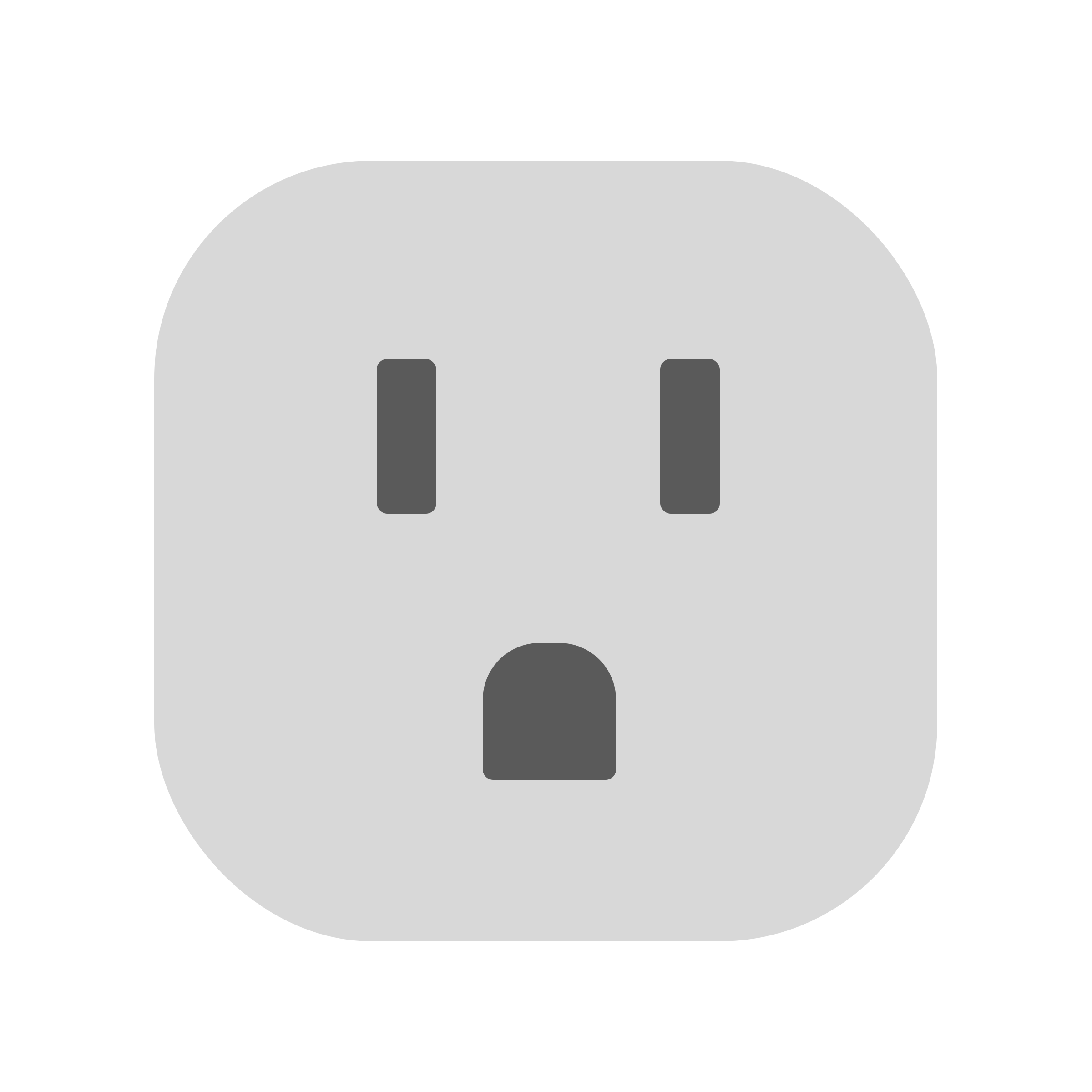
Type B
No fit
Accepted in Democratic Republic of the Congo

Type C

Type E
0 of 2 plug type(s) match
You: A, B • Democratic Republic of the Congo: C, E
No fit for: A, B

Voltage: 110V / 220V → 230V
Different voltage
You may need a voltage converter.

Frequency: 60Hz → 50Hz
Different frequency
Check device supports both 50/60 Hz.
 You will need an adapter and likely a converter
Adapters you may need
Your plug shape does not fully match. Voltage differs; check for 100–240V support.
About electricity in Democratic Republic of the Congo
The Democratic Republic of the Congo is 230V/50Hz with Type C and E sockets.
Grid & history
The DRC has vast hydropower potential. The Inga dams on the Congo River are among the largest in Africa. Despite this, electrification rates are low and many regions rely on diesel generators or have no grid at all.
Availability
Reliable only in Kinshasa, Lubumbashi, and a few other cities. Most of the country is off-grid.
Sockets & hotels
Type E (French) is standard in cities.
Energy mix
Hydropower-dominated where grid exists; vast unelectrified population.
Practical tips
- European C/E adapter works.
- A power bank is essential outside major cities.
Frequently asked questions
- Will my Antigua and Barbuda plug work in Democratic Republic of the Congo?
- No. None of your Antigua and Barbuda plugs (Type A, Type B) fit in Democratic Republic of the Congo sockets (Type C, Type E), so you will need a travel adapter.
- What plug type does Democratic Republic of the Congo use?
- Democratic Republic of the Congo uses Type C, Type E. The supply is 230V at 50Hz.
- Do I need a voltage converter for Democratic Republic of the Congo when travelling from Antigua and Barbuda?
- Democratic Republic of the Congo runs on 230V, while Antigua and Barbuda uses 110V / 220V. Check your charger label for a 100 to 240V rating; if it does not list 230V you will also need a voltage converter.
- Is the electrical frequency in Democratic Republic of the Congo the same as Antigua and Barbuda?
- Frequency in Democratic Republic of the Congo is 50Hz, while Antigua and Barbuda uses 60Hz. Modern phone and laptop chargers handle either, but clocks, motors, and some heating appliances may behave incorrectly.