From Antigua and Barbuda to China
When travelling from Antigua and Barbuda to China: Some of your Antigua and Barbuda plug types fit in China (A). Bring a compact adapter for the others. Voltage is different (110V / 220V → 230V). Check your charger label; if it doesn’t list 230V you’ll also need a voltage converter. Frequency differs (60Hz → 50Hz). Modern phone and laptop chargers are usually fine, but some clocks, motors, and appliances may behave incorrectly.
 Antigua and Barbuda
 China
ChinaYour plugs

Type A
Fits
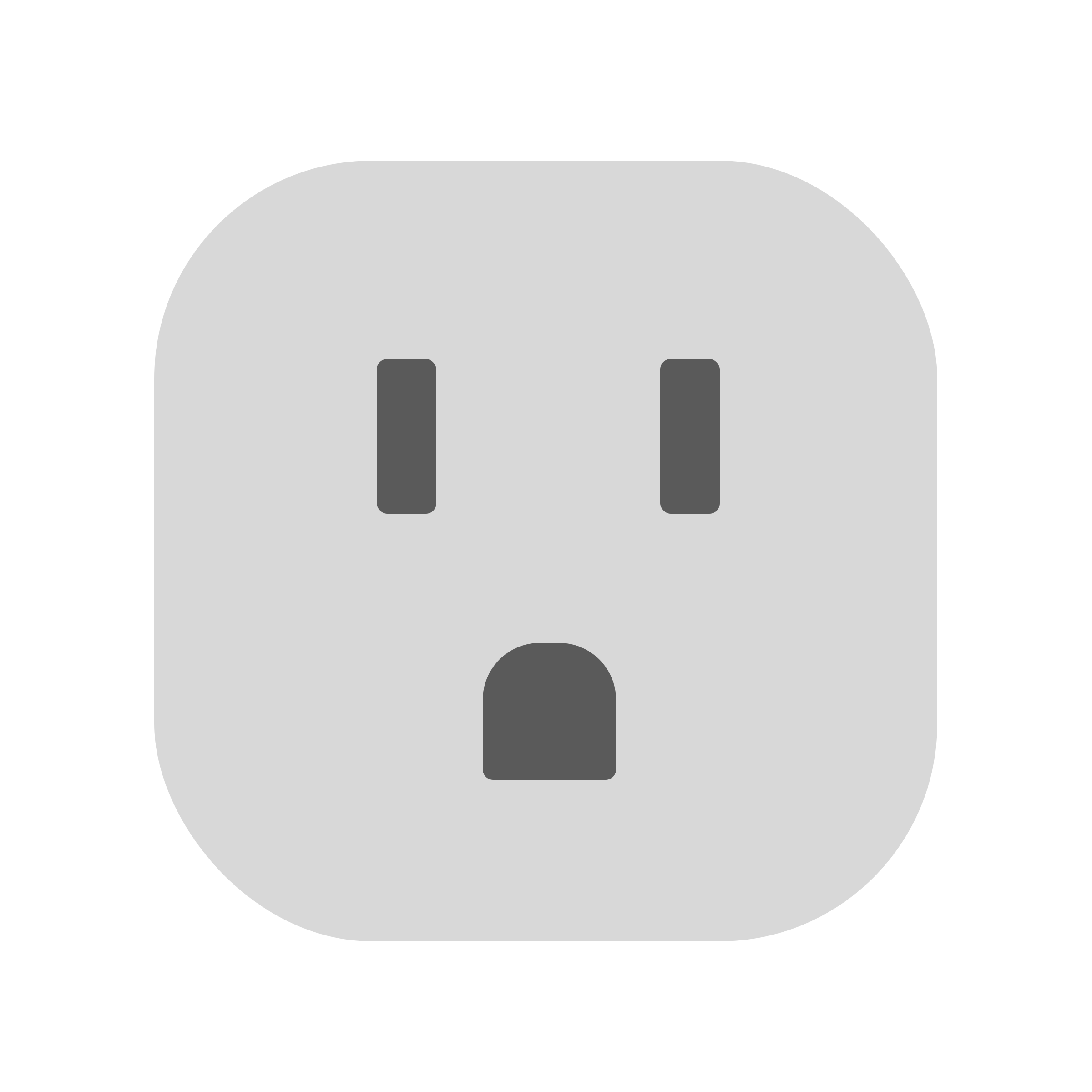
Type B
No fit
Accepted in China
Type A

Type I
1 of 2 plug type(s) match
You: A, B • China: A, I
No fit for: B

Voltage: 110V / 220V → 230V
Different voltage
You may need a voltage converter.

Frequency: 60Hz → 50Hz
Different frequency
Check device supports both 50/60 Hz.
 You will need an adapter and likely a converter
Adapters you may need
Your plug shape does not fully match. Voltage differs; check for 100–240V support.
About electricity in China
China runs on 230V/50Hz with Type A, C, and I sockets. Modern buildings often have universal sockets that accept all three.
Grid & history
China operates the world’s largest electricity grid. Coal still provides the majority of supply, but the country also leads the world in solar and wind installation and operates both the largest hydro plant (Three Gorges) and a fast-growing nuclear fleet.
Availability
Supply is reliable in cities and tourist areas. The rural west and remote mountainous areas can see occasional outages.
Sockets & hotels
Type A (US-style flat pins) and Type I (the Australian and Chinese three-pin) are both in use, often in the same socket, and Type C (Europlug) usually fits as well.
Energy mix
Coal still primary, but renewables and nuclear are scaling fast.
Practical tips
- A universal adapter with A and I prongs is safest.
- Chinese Type I sockets are slightly different from Australian Type I, but in practice the plugs are interchangeable.
- Voltage is 230V, so US-only appliances need a converter, not just an adapter.
Frequently asked questions
- Will my Antigua and Barbuda plug work in China?
- Partly. Some of your Antigua and Barbuda plug types (Type A) fit China sockets, but others do not. Bring a compact adapter for the rest.
- What plug type does China use?
- China uses Type A, Type I. The supply is 230V at 50Hz.
- Do I need a voltage converter for China when travelling from Antigua and Barbuda?
- China runs on 230V, while Antigua and Barbuda uses 110V / 220V. Check your charger label for a 100 to 240V rating; if it does not list 230V you will also need a voltage converter.
- Is the electrical frequency in China the same as Antigua and Barbuda?
- Frequency in China is 50Hz, while Antigua and Barbuda uses 60Hz. Modern phone and laptop chargers handle either, but clocks, motors, and some heating appliances may behave incorrectly.