From Antigua and Barbuda to Spain
When travelling from Antigua and Barbuda to Spain: None of your Antigua and Barbuda plug types fit in Spain. You will need a travel adapter. Voltage is different (110V / 220V → 230V). Check your charger label; if it doesn’t list 230V you’ll also need a voltage converter. Frequency differs (60Hz → 50Hz). Modern phone and laptop chargers are usually fine, but some clocks, motors, and appliances may behave incorrectly.
 Antigua and Barbuda
 Spain
SpainYour plugs

Type A
No fit
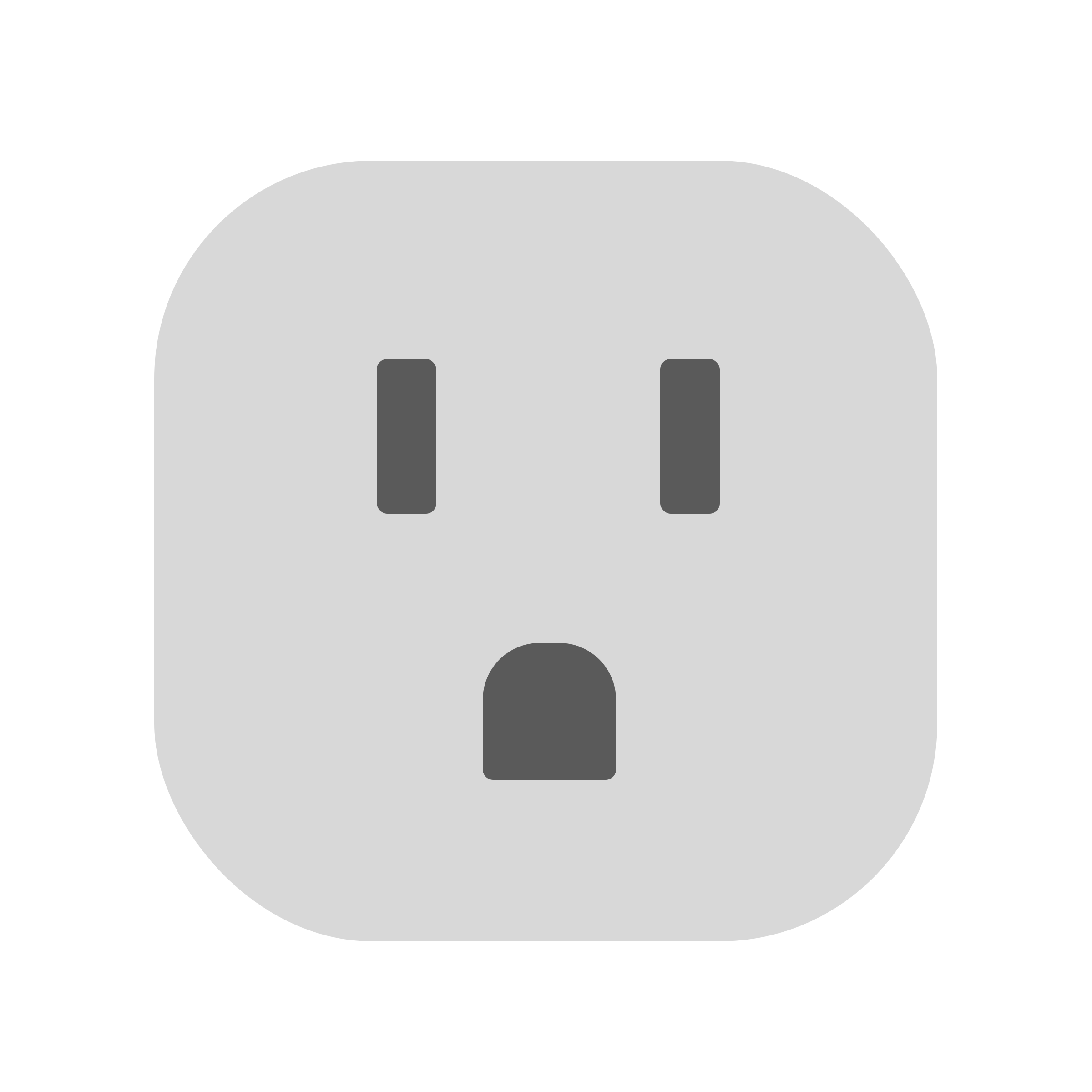
Type B
No fit
Accepted in Spain

Type C

Type F
0 of 2 plug type(s) match
You: A, B • Spain: C, F
No fit for: A, B

Voltage: 110V / 220V → 230V
Different voltage
You may need a voltage converter.

Frequency: 60Hz → 50Hz
Different frequency
Check device supports both 50/60 Hz.
 You will need an adapter and likely a converter
Adapters you may need
Your plug shape does not fully match. Voltage differs; check for 100–240V support.
About electricity in Spain
Spain runs on the standard continental European setup: 230V/50Hz with Type C and F (Schuko) sockets.
Grid & history
Spain has one of Europe’s highest renewable shares. Wind, solar, and hydro together cover roughly half of generation, with nuclear and gas filling most of the rest. The April 2025 Iberian blackout was a rare exception caused by a grid balancing failure.
Availability
The grid is reliable nationwide with isolated exceptions. The Canary Islands and Balearics run on smaller local grids, but supply is steady.
Sockets & hotels
Type F (Schuko) is the standard in homes and hotels, and Type C plugs slot into Type F sockets without an adapter.
Energy mix
Wind is the single largest source.
Practical tips
- A European C/F adapter covers the whole Iberian peninsula.
- On long bus or train journeys, USB ports are common at the seat.
Frequently asked questions
- Will my Antigua and Barbuda plug work in Spain?
- No. None of your Antigua and Barbuda plugs (Type A, Type B) fit in Spain sockets (Type C, Type F), so you will need a travel adapter.
- What plug type does Spain use?
- Spain uses Type C, Type F. The supply is 230V at 50Hz.
- Do I need a voltage converter for Spain when travelling from Antigua and Barbuda?
- Spain runs on 230V, while Antigua and Barbuda uses 110V / 220V. Check your charger label for a 100 to 240V rating; if it does not list 230V you will also need a voltage converter.
- Is the electrical frequency in Spain the same as Antigua and Barbuda?
- Frequency in Spain is 50Hz, while Antigua and Barbuda uses 60Hz. Modern phone and laptop chargers handle either, but clocks, motors, and some heating appliances may behave incorrectly.