From Antigua and Barbuda to France
When travelling from Antigua and Barbuda to France: None of your Antigua and Barbuda plug types fit in France. You will need a travel adapter. Voltage is different (110V / 220V → 230V). Check your charger label; if it doesn’t list 230V you’ll also need a voltage converter. Frequency differs (60Hz → 50Hz). Modern phone and laptop chargers are usually fine, but some clocks, motors, and appliances may behave incorrectly.
 Antigua and Barbuda
 France
Your plugs

Type A
No fit
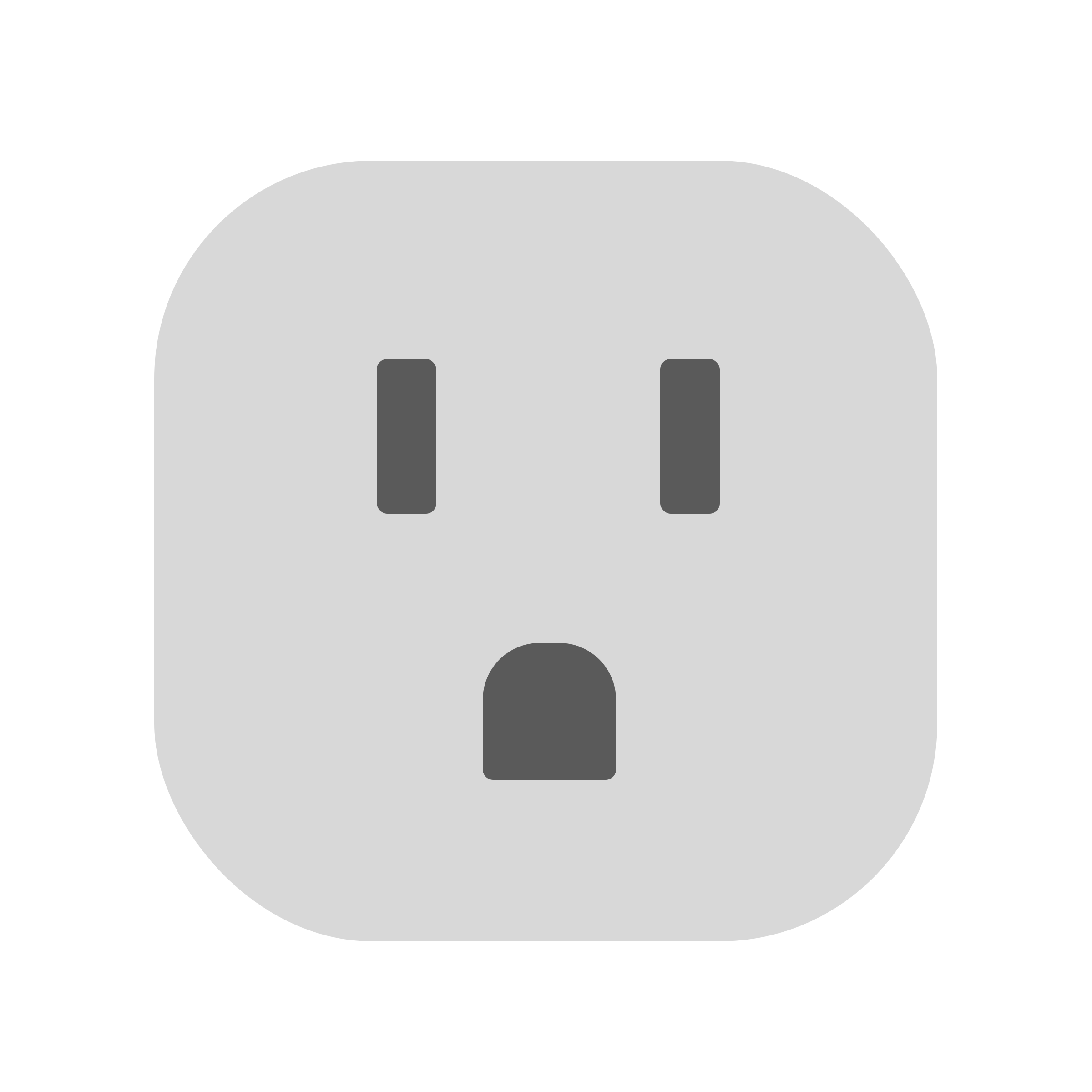
Type B
No fit
Accepted in France

Type C

Type E
0 of 2 plug type(s) match
You: A, B • France: C, E
No fit for: A, B

Voltage: 110V / 220V → 230V
Different voltage
You may need a voltage converter.

Frequency: 60Hz → 50Hz
Different frequency
Check device supports both 50/60 Hz.
 You will need an adapter and likely a converter
Adapters you may need
Your plug shape does not fully match. Voltage differs; check for 100–240V support.
About electricity in France
France runs on 230V/50Hz with Type C and E sockets. Type E has a male earth pin built into the socket itself, so flat-pin US and Canadian chargers will not fit without an adapter.
Grid & history
France has one of the world’s most nuclear-heavy grids: roughly two-thirds of generation comes from EDF’s fleet of 56 reactors, the largest in Europe. The rest is hydropower from the Alps and Pyrenees, with growing wind and solar.
Availability
The grid is highly reliable nationwide, including in rural areas. Storms occasionally cause brief outages in the south and west.
Sockets & hotels
Type E is the dominant socket: two round holes with a male earth pin protruding from the socket. Type C Europlugs slot straight into Type E sockets, but without the earth connection.
Energy mix
Nuclear has been the backbone since the 1970s oil shocks.
Practical tips
- A small Type C/E adapter (often sold as “European”) is all you need.
- Modern phone and laptop chargers handle 230V; older US-only heaters and hair dryers do not.
- TGV trains have power sockets in standard and first class on most routes.
Frequently asked questions
- Will my Antigua and Barbuda plug work in France?
- No. None of your Antigua and Barbuda plugs (Type A, Type B) fit in France sockets (Type C, Type E), so you will need a travel adapter.
- What plug type does France use?
- France uses Type C, Type E. The supply is 230V at 50Hz.
- Do I need a voltage converter for France when travelling from Antigua and Barbuda?
- France runs on 230V, while Antigua and Barbuda uses 110V / 220V. Check your charger label for a 100 to 240V rating; if it does not list 230V you will also need a voltage converter.
- Is the electrical frequency in France the same as Antigua and Barbuda?
- Frequency in France is 50Hz, while Antigua and Barbuda uses 60Hz. Modern phone and laptop chargers handle either, but clocks, motors, and some heating appliances may behave incorrectly.