From Antigua and Barbuda to Italy
When travelling from Antigua and Barbuda to Italy: None of your Antigua and Barbuda plug types fit in Italy. You will need a travel adapter. Voltage is different (110V / 220V → 230V). Check your charger label; if it doesn’t list 230V you’ll also need a voltage converter. Frequency differs (60Hz → 50Hz). Modern phone and laptop chargers are usually fine, but some clocks, motors, and appliances may behave incorrectly.
 Antigua and Barbuda
 Italy
ItalyYour plugs

Type A
No fit
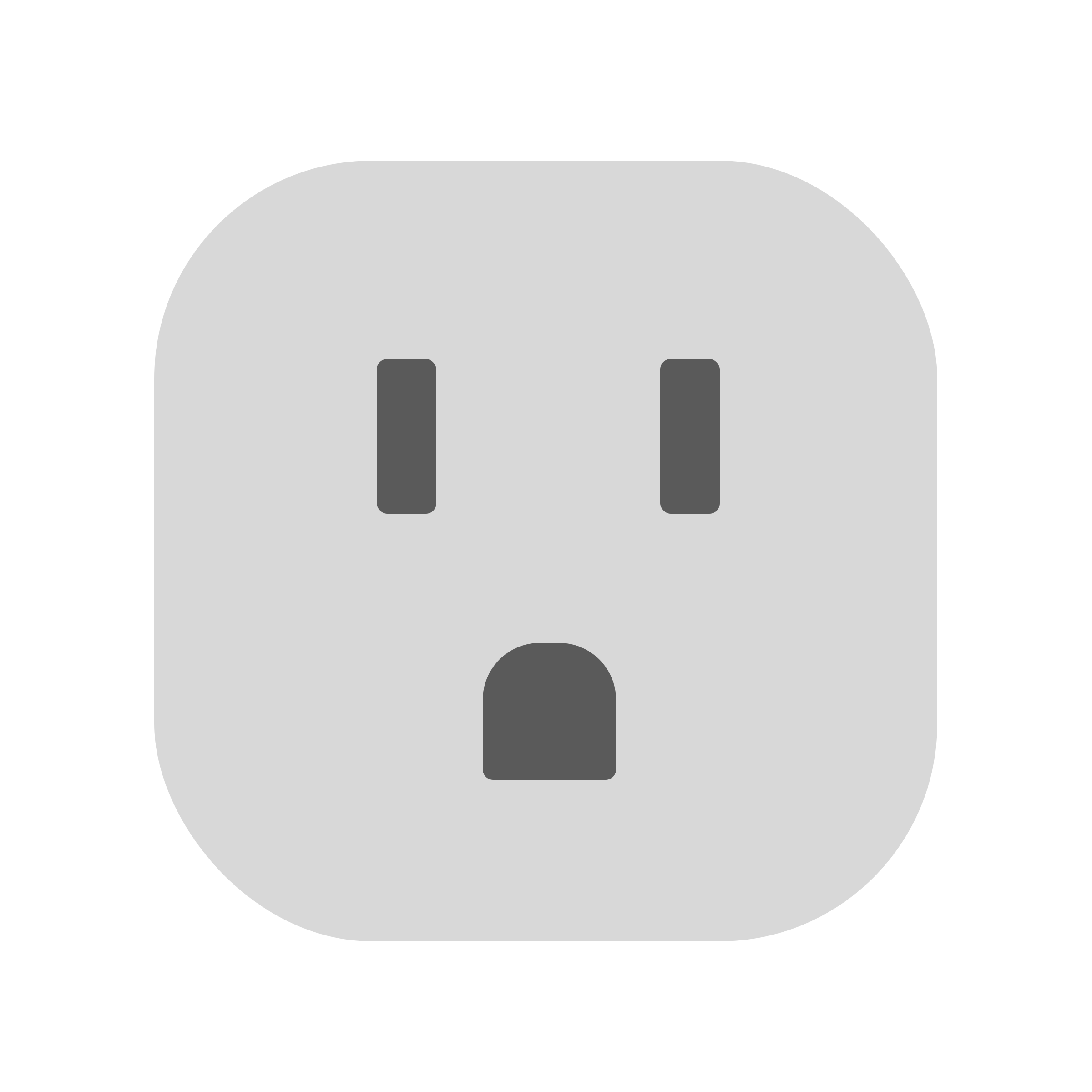
Type B
No fit
Accepted in Italy

Type C

Type F

Type L
0 of 2 plug type(s) match
You: A, B • Italy: C, F, L
No fit for: A, B

Voltage: 110V / 220V → 230V
Different voltage
You may need a voltage converter.

Frequency: 60Hz → 50Hz
Different frequency
Check device supports both 50/60 Hz.
 You will need an adapter and likely a converter
Adapters you may need
Your plug shape does not fully match. Voltage differs; check for 100–240V support.
About electricity in Italy
Italy uses 230V/50Hz with Type C, F, and L sockets. Type L is the Italian three-pins-in-a-line standard, and you will not see it anywhere else.
Grid & history
Italy phased out domestic nuclear after the 1987 referendum and now imports significant electricity from France and Switzerland. Solar is a major contributor today, with gas covering most of the rest.
Availability
Reliability is good in cities. Rural southern Italy and Sicily occasionally see short outages during heatwaves.
Sockets & hotels
Type L comes in two sizes: a 10A narrow version and a 16A wide one. Italian sockets often accept all of C, F, and L in the same hole, though older buildings may only have Type L.
Energy mix
Significant electricity imports from neighbours.
Practical tips
- A universal adapter covering C, F, and L is safest, especially in historic city centres.
- Modern hotels almost always have at least one Schuko (F) or hybrid socket.
Frequently asked questions
- Will my Antigua and Barbuda plug work in Italy?
- No. None of your Antigua and Barbuda plugs (Type A, Type B) fit in Italy sockets (Type C, Type F, Type L), so you will need a travel adapter.
- What plug type does Italy use?
- Italy uses Type C, Type F, Type L. The supply is 230V at 50Hz.
- Do I need a voltage converter for Italy when travelling from Antigua and Barbuda?
- Italy runs on 230V, while Antigua and Barbuda uses 110V / 220V. Check your charger label for a 100 to 240V rating; if it does not list 230V you will also need a voltage converter.
- Is the electrical frequency in Italy the same as Antigua and Barbuda?
- Frequency in Italy is 50Hz, while Antigua and Barbuda uses 60Hz. Modern phone and laptop chargers handle either, but clocks, motors, and some heating appliances may behave incorrectly.