From Antigua and Barbuda to New Zealand
When travelling from Antigua and Barbuda to New Zealand: None of your Antigua and Barbuda plug types fit in New Zealand. You will need a travel adapter. Voltage is different (110V / 220V → 230V). Check your charger label; if it doesn’t list 230V you’ll also need a voltage converter. Frequency differs (60Hz → 50Hz). Modern phone and laptop chargers are usually fine, but some clocks, motors, and appliances may behave incorrectly.
 Antigua and Barbuda
 New Zealand
Your plugs

Type A
No fit
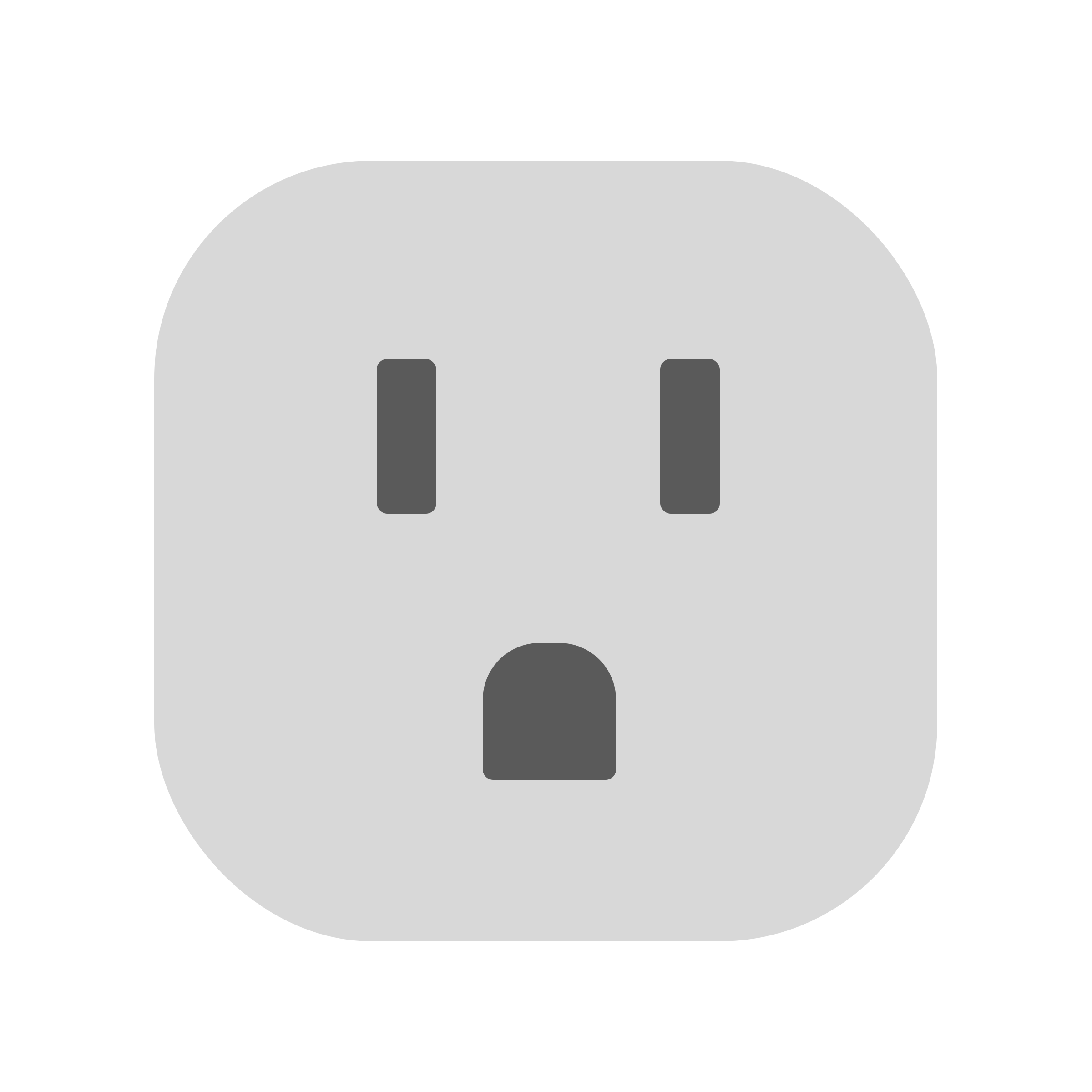
Type B
No fit
Accepted in New Zealand

Type I
0 of 2 plug type(s) match
You: A, B • New Zealand: I
No fit for: A, B

Voltage: 110V / 220V → 230V
Different voltage
You may need a voltage converter.

Frequency: 60Hz → 50Hz
Different frequency
Check device supports both 50/60 Hz.
 You will need an adapter and likely a converter
Adapters you may need
Your plug shape does not fully match. Voltage differs; check for 100–240V support.
About electricity in New Zealand
New Zealand runs on 230V/50Hz with Type I sockets, the same standard used in Australia.
Grid & history
Around 80% of New Zealand’s electricity comes from renewables. Most of that is hydropower, with significant geothermal in the central North Island and growing wind. The country has no nuclear power.
Availability
Supply is reliable nationwide, though South Island winter storms can cause brief outages.
Sockets & hotels
Type I has two flat angled blades plus an earth pin below. Plugs are physically and electrically interchangeable with Australian Type I.
Energy mix
Hydro and geothermal dominate.
Practical tips
- An Australian or NZ Type I adapter works in both countries.
- Voltage is 230V, so standard chargers are fine.
Frequently asked questions
- Will my Antigua and Barbuda plug work in New Zealand?
- No. None of your Antigua and Barbuda plugs (Type A, Type B) fit in New Zealand sockets (Type I), so you will need a travel adapter.
- What plug type does New Zealand use?
- New Zealand uses Type I. The supply is 230V at 50Hz.
- Do I need a voltage converter for New Zealand when travelling from Antigua and Barbuda?
- New Zealand runs on 230V, while Antigua and Barbuda uses 110V / 220V. Check your charger label for a 100 to 240V rating; if it does not list 230V you will also need a voltage converter.
- Is the electrical frequency in New Zealand the same as Antigua and Barbuda?
- Frequency in New Zealand is 50Hz, while Antigua and Barbuda uses 60Hz. Modern phone and laptop chargers handle either, but clocks, motors, and some heating appliances may behave incorrectly.