From Antigua and Barbuda to South Africa
When travelling from Antigua and Barbuda to South Africa: None of your Antigua and Barbuda plug types fit in South Africa. You will need a travel adapter. Voltage is different (110V / 220V → 230V). Check your charger label; if it doesn’t list 230V you’ll also need a voltage converter. Frequency differs (60Hz → 50Hz). Modern phone and laptop chargers are usually fine, but some clocks, motors, and appliances may behave incorrectly.
 Antigua and Barbuda
 South Africa
Your plugs

Type A
No fit
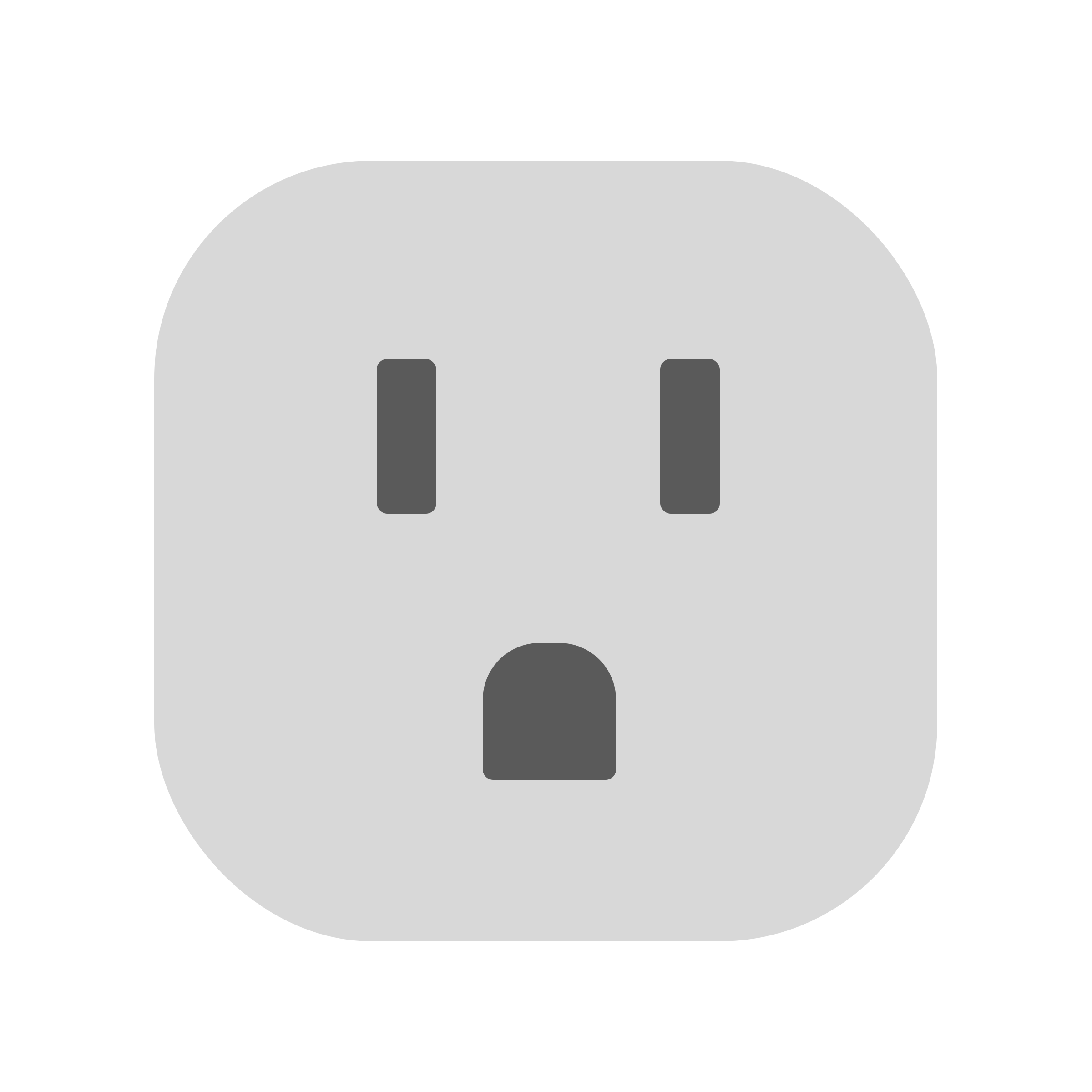
Type B
No fit
Accepted in South Africa

Type C

Type M

Type N
0 of 2 plug type(s) match
You: A, B • South Africa: C, M, N
No fit for: A, B

Voltage: 110V / 220V → 230V
Different voltage
You may need a voltage converter.

Frequency: 60Hz → 50Hz
Different frequency
Check device supports both 50/60 Hz.
 You will need an adapter and likely a converter
Adapters you may need
Your plug shape does not fully match. Voltage differs; check for 100–240V support.
About electricity in South Africa
South Africa is 230V/50Hz with Type C, M, and N sockets. Type M is the older 15A three-pin standard; Type N is the newer compact one. Both are in active use.
Grid & history
Eskom operates the national grid, which has suffered chronic load-shedding since the 2010s as ageing coal plants struggle to keep up with demand. The renewable rollout is underway but the transition is slow.
Availability
Scheduled load-shedding (rolling blackouts) is a regular fact of life. Most hotels, restaurants, and offices have generator or battery backup; private homes increasingly run inverters.
Sockets & hotels
Type M (large round-pin) dominates older buildings; Type N (smaller, newer) is replacing it. Type C Europlugs fit Type N sockets but not Type M without an adapter.
Energy mix
Coal-heavy; renewables and battery storage growing.
Practical tips
- A Type M adapter is essential and not always included in universal kits. Buy one before you arrive.
- Bring a power bank; assume scheduled load-shedding during your stay (apps like EskomSePush show the daily schedule).
- Voltage is 230V; standard chargers handle it.
Frequently asked questions
- Will my Antigua and Barbuda plug work in South Africa?
- No. None of your Antigua and Barbuda plugs (Type A, Type B) fit in South Africa sockets (Type C, Type M, Type N), so you will need a travel adapter.
- What plug type does South Africa use?
- South Africa uses Type C, Type M, Type N. The supply is 230V at 50Hz.
- Do I need a voltage converter for South Africa when travelling from Antigua and Barbuda?
- South Africa runs on 230V, while Antigua and Barbuda uses 110V / 220V. Check your charger label for a 100 to 240V rating; if it does not list 230V you will also need a voltage converter.
- Is the electrical frequency in South Africa the same as Antigua and Barbuda?
- Frequency in South Africa is 50Hz, while Antigua and Barbuda uses 60Hz. Modern phone and laptop chargers handle either, but clocks, motors, and some heating appliances may behave incorrectly.