From Fiji to Bulgaria
When travelling from Fiji to Bulgaria: None of your Fiji plug types fit in Bulgaria. You will need a travel adapter. Voltage is different (240V → 230V). Check your charger label; if it doesn’t list 230V you’ll also need a voltage converter. Frequency is the same at 50Hz.
 Fiji
Fiji Bulgaria
Your plugs
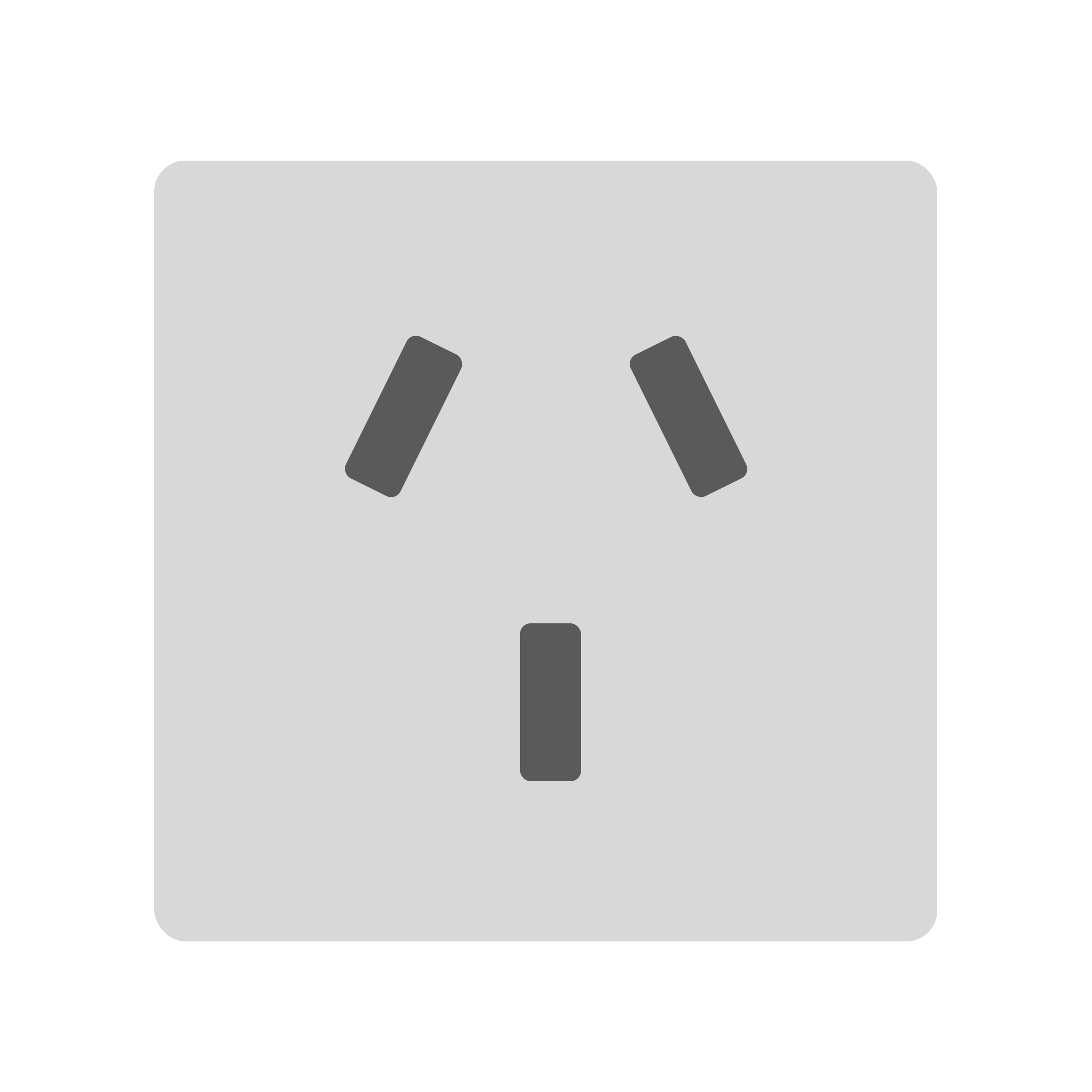
Type I
No fit
Accepted in Bulgaria

Type C

Type F
0 of 1 plug type(s) match
You: I • Bulgaria: C, F
No fit for: I

Voltage: 240V → 230V
Different voltage
You may need a voltage converter.

Frequency: 50Hz → 50Hz
Same frequency
You will need an adapter and likely a converterAdapters you may need
Your plug shape does not fully match. Voltage differs; check for 100–240V support.
About electricity in Bulgaria
Bulgaria is 230V/50Hz with Type C and F (Schuko) sockets.
Grid & history
The Kozloduy nuclear plant covers about a third of Bulgarian electricity. Coal still plays a major role; renewables (mostly hydro and wind) are growing.
Availability
Reliable in cities; rural Rhodope and Balkan mountain areas can see brief outages.
Sockets & hotels
Type F (Schuko) is the standard.
Energy mix
Coal in decline.
Practical tips
- A small Type C/F European adapter is all you need.
- Voltage is the standard 230V, and modern chargers handle it without issue.
Frequently asked questions
- Will my Fiji plug work in Bulgaria?
- No. None of your Fiji plugs (Type I) fit in Bulgaria sockets (Type C, Type F), so you will need a travel adapter.
- What plug type does Bulgaria use?
- Bulgaria uses Type C, Type F. The supply is 230V at 50Hz.
- Do I need a voltage converter for Bulgaria when travelling from Fiji?
- Bulgaria runs on 230V, while Fiji uses 240V. Check your charger label for a 100 to 240V rating; if it does not list 230V you will also need a voltage converter.
- Is the electrical frequency in Bulgaria the same as Fiji?
- Frequency in Bulgaria is 50Hz, the same as Fiji.