From Canary Islands to Japan
When travelling from Canary Islands to Japan: None of your Canary Islands plug types fit in Japan. You will need a travel adapter. Voltage is different (230V → 100V). Check your charger label; if it doesn’t list 100V you’ll also need a voltage converter. Frequency differs (50Hz → 50Hz / 60Hz). Modern phone and laptop chargers are usually fine, but some clocks, motors, and appliances may behave incorrectly.
 Canary Islands
 Japan
JapanYour plugs

Type C
No fit

Type F
No fit
Accepted in Japan

Type A
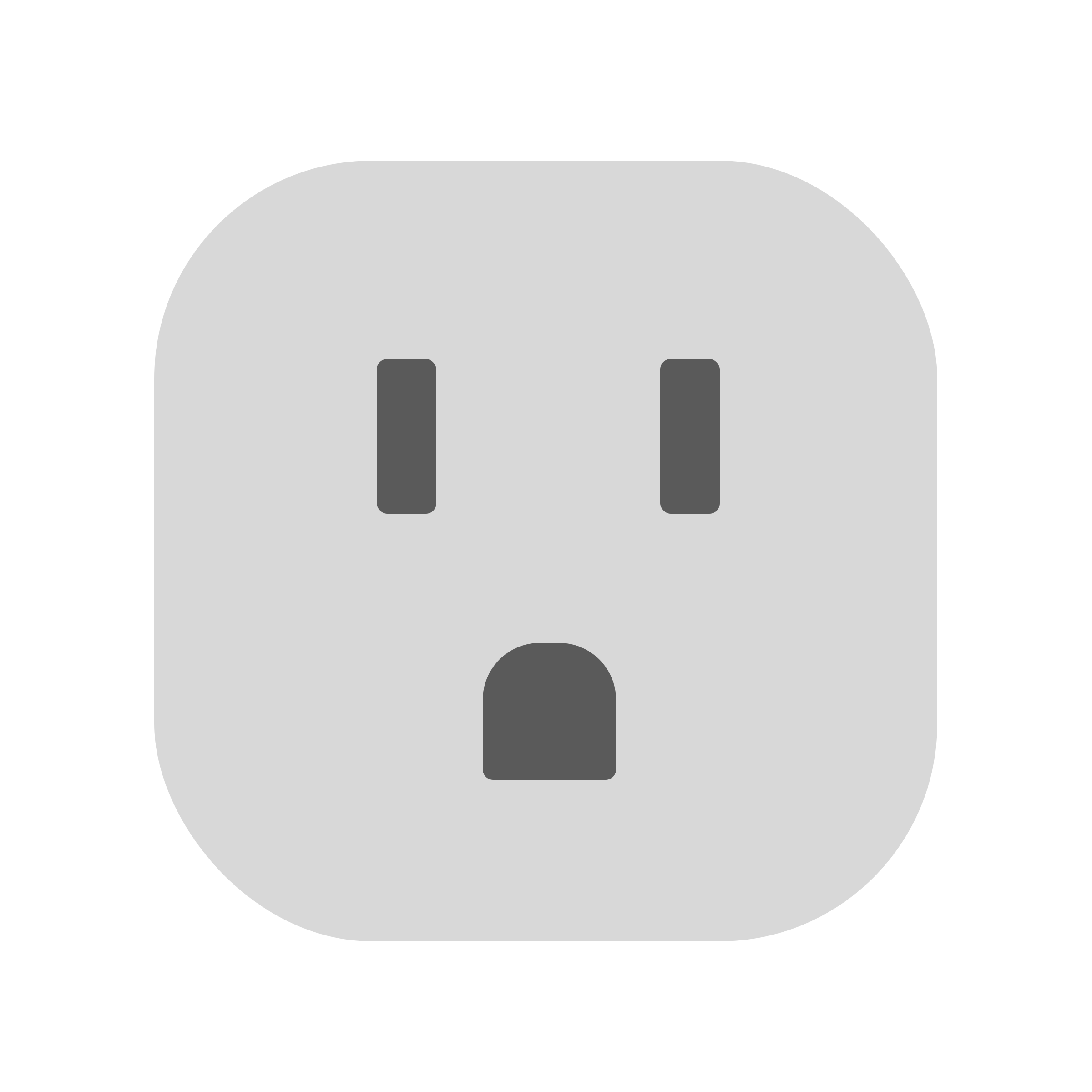
Type B
0 of 2 plug type(s) match
You: C, F • Japan: A, B
No fit for: C, F

Voltage: 230V → 100V
Different voltage
You may need a voltage converter.

Frequency: 50Hz → 50Hz / 60Hz
Different frequency
Check device supports both 50/60 Hz.
 You will need an adapter and likely a converter
Adapters you may need
Your plug shape does not fully match. Voltage differs; check for 100–240V support.
About electricity in Japan
Japan uses 100V with both 50Hz (east of the Fuji River, including Tokyo) and 60Hz (west, including Osaka). Sockets are Type A and B.
Grid & history
Japan’s split-frequency grid is a 19th-century legacy: Tokyo bought German 50Hz generators while Osaka bought American 60Hz ones, and the two never unified. Frequency converters now straddle the boundary. Post-Fukushima, nuclear is partially restarting while gas and coal still dominate.
Availability
Reliability is very high in cities. Typhoons and earthquakes cause regional outages.
Sockets & hotels
Many older sockets are ungrounded Type A, while newer buildings have grounded Type B for high-draw appliances.
Energy mix
Nuclear share fluctuates as more reactors return to service.
Practical tips
- US flat-pin plugs (Type A) fit Japanese outlets directly, so most travellers do not need an adapter.
- Voltage is 100V, which is slightly lower than the US 120V. Modern chargers handle this without issue, but heating appliances may run weak.
- If your gear is frequency-sensitive (clocks, some motors), check whether you will be in 50Hz or 60Hz territory.
Frequently asked questions
- Will my Canary Islands plug work in Japan?
- No. None of your Canary Islands plugs (Type C, Type F) fit in Japan sockets (Type A, Type B), so you will need a travel adapter.
- What plug type does Japan use?
- Japan uses Type A, Type B. The supply is 100V at 50Hz / 60Hz.
- Do I need a voltage converter for Japan when travelling from Canary Islands?
- Japan runs on 100V, while Canary Islands uses 230V. Check your charger label for a 100 to 240V rating; if it does not list 100V you will also need a voltage converter.
- Is the electrical frequency in Japan the same as Canary Islands?
- Frequency in Japan is 50Hz / 60Hz, while Canary Islands uses 50Hz. Modern phone and laptop chargers handle either, but clocks, motors, and some heating appliances may behave incorrectly.