From Philippines to Tanzania
When travelling from Philippines to Tanzania: None of your Philippines plug types fit in Tanzania. You will need a travel adapter. Voltage matches at 230V, so a basic plug adapter is enough for most devices. Frequency differs (60Hz → 50Hz). Modern phone and laptop chargers are usually fine, but some clocks, motors, and appliances may behave incorrectly.
 Philippines
 Tanzania
Your plugs

Type A
No fit
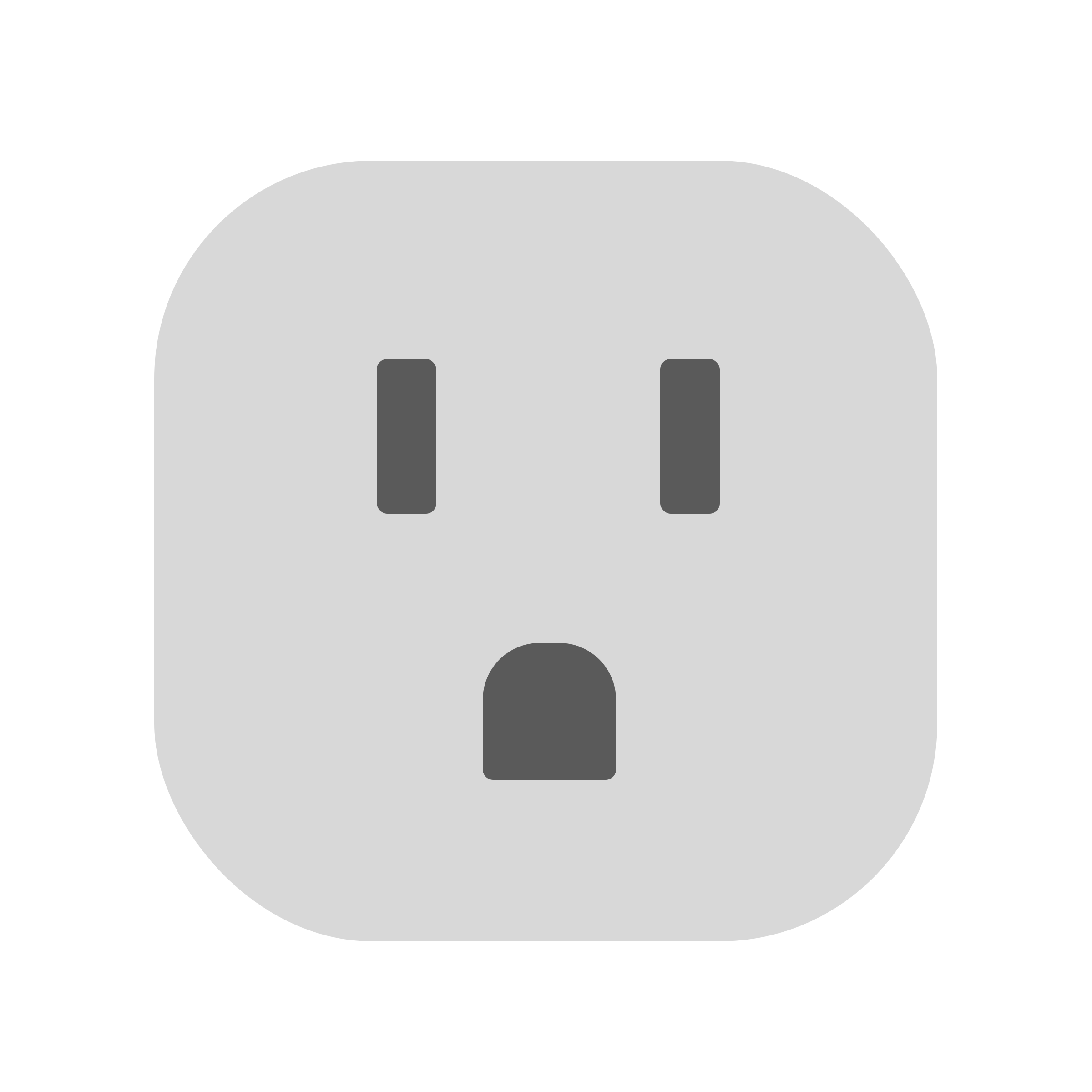
Type B
No fit

Type C
No fit
Accepted in Tanzania

Type G
0 of 3 plug type(s) match
You: A, B, C • Tanzania: G
No fit for: A, B, C

Voltage: 230V → 230V
Same voltage

Frequency: 60Hz → 50Hz
Different frequency
Check device supports both 50/60 Hz.
 You will need an adapter
Adapters you may need
Your plug shape does not fully match.
About electricity in Tanzania
Tanzania uses 230V/50Hz with Type G sockets, the UK-style three-pin standard.
Grid & history
TANESCO operates the national grid, which is hydro-heavy (Nyumba ya Mungu, Kihansi) with gas backup. The new Julius Nyerere Hydropower Project on the Rufiji River is significantly expanding capacity.
Availability
Reliable in Dar es Salaam, Arusha, and Zanzibar. Rural areas and Zanzibar after storms can see longer outages.
Sockets & hotels
Type G is standard in modern buildings and hotels.
Energy mix
Hydropower is the largest source.
Practical tips
- A Type G adapter is essential for any non-UK plug.
- Bring a power bank for safari and Zanzibar power dips.
- Voltage is the standard 230V, and modern chargers handle it without issue.
Frequently asked questions
- Will my Philippines plug work in Tanzania?
- No. None of your Philippines plugs (Type A, Type B, Type C) fit in Tanzania sockets (Type G), so you will need a travel adapter.
- What plug type does Tanzania use?
- Tanzania uses Type G. The supply is 230V at 50Hz.
- Do I need a voltage converter for Tanzania when travelling from Philippines?
- Tanzania runs on 230V, the same as Philippines. Any charger that works at home will work there.
- Is the electrical frequency in Tanzania the same as Philippines?
- Frequency in Tanzania is 50Hz, while Philippines uses 60Hz. Modern phone and laptop chargers handle either, but clocks, motors, and some heating appliances may behave incorrectly.